

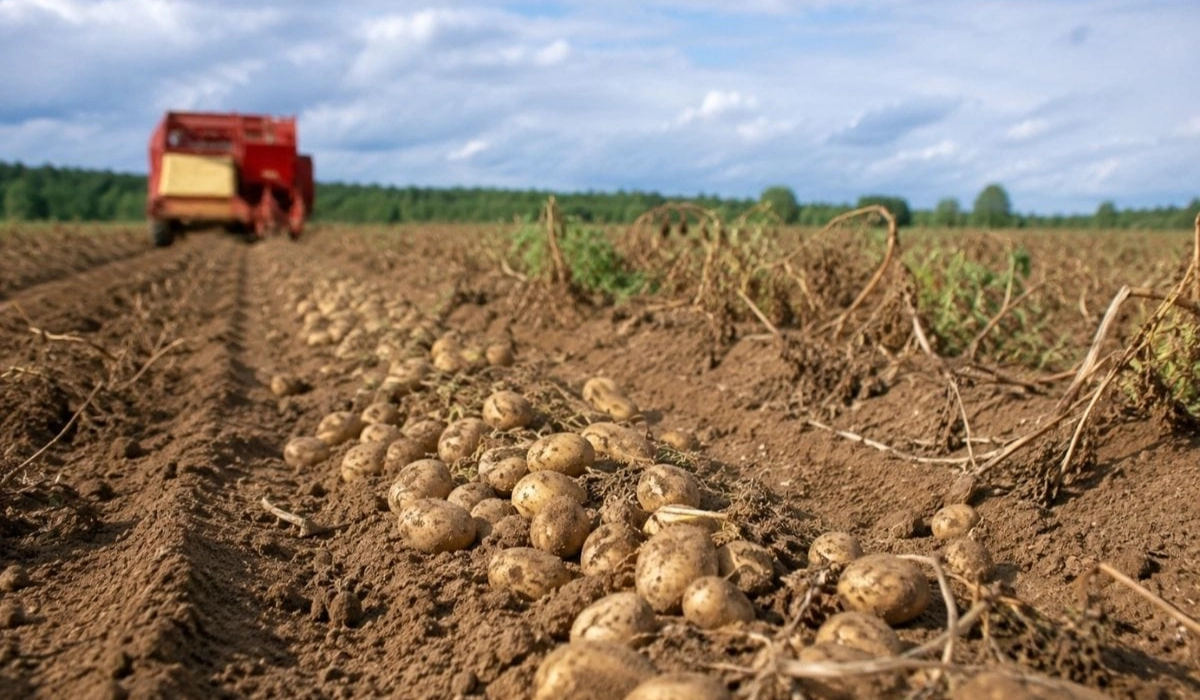
Europe’s potato industry is heading towards a markedly tighter 2026/27 season, with the European Union’s potato crop forecast to fall below 40 million tonnes for the first time, according to market estimates. World Potato Markets expects the crop to be around 15 million tonnes lower than the previous year, as growers reduced planting following a period of severe oversupply and subsequent heatwaves and drought damaged crop prospects. The potential decline is already being reflected in processing potato prices, adding pressure to a market that supplies Europe’s large frozen chips and processed potato industries.
Why is Europe’s industrial potato harvest expected to fall?
The main reason is a combination of smaller planted areas and adverse summer weather. Potato growers across important European producing regions reduced acreage after exceptionally weak prices during the 2025/26 marketing season.
The North-West European Potato Growers (NEPG) reported an estimated 11% reduction in ware potato acreage across Belgium, France, Germany and the Netherlands. The area fell from approximately 604,100 hectares in 2025 to 536,900 hectares in 2026, a reduction of about 67,000 hectares.
The reductions were particularly pronounced in Belgium, where plantings fell by 16.6%, and the Netherlands, where they declined by 15.1%. France recorded a 9.7% reduction, while German acreage was also estimated to have fallen.
That acreage adjustment was initially intended to restore balance to a market that had been overwhelmed by supply. However, the smaller planting base has left growers with less protection against weather-related losses.
How have heatwaves and drought affected potato production?
Weather has become a major additional risk for the 2026 crop. Several heatwaves affected potato-growing areas during critical stages of tuber development, while drought conditions subsequently restricted water availability in parts of Europe.
Potatoes are particularly sensitive to prolonged heat and water stress during tuber bulking. Poor growing conditions can reduce both yields and the size and quality of harvested tubers, potentially limiting the quantity suitable for industrial processing.
Market reports have highlighted heat and drought concerns across several major producing countries, including Germany, France, Belgium, the Netherlands and Poland. Five heatwaves during the recent period have added to the pressure already created by reduced planting.
The precise scale of the damage remains uncertain because potato yields vary significantly according to soil type, planting date, variety, irrigation and local rainfall. Some growers have also delayed harvesting while waiting for improved moisture conditions.
Recent rainfall has improved harvesting conditions in parts of Belgium, but market participants remain cautious about whether late-season rain can materially improve final yields and tuber size.
What does the lower crop mean for industrial potato prices?
The anticipated reduction in supply has already contributed to a sharp recovery in processing potato prices after an exceptionally weak previous season.
Expana benchmark prices for Fontane processing potatoes delivered ex-works in Belgium rose from about €10 per tonne in late July to €150 per tonne at the beginning of August. The price remained around €150 per tonne on 25 August as traders assessed the availability of the new crop.
The change represents a dramatic reversal from earlier in 2026, when the European industrial potato market was struggling with surplus supplies.
In Belgium, processing potato prices had fallen so severely during the previous season that open-market prices reached effectively zero in April amid excess supply and limited processor demand. Growers faced a surplus of several hundred thousand tonnes, while processors already held substantial stocks.
The latest market movement therefore illustrates how quickly conditions can change in the potato sector. A surplus one season can be followed by concerns about shortages when farmers reduce planting and weather conditions deteriorate.
Why did European growers reduce planting in 2026?
Growers reduced acreage largely because the previous marketing season had become economically unsustainable for many producers.
The NEPG said free-market prices had remained between €0 and €2 per 100kg for extended periods, levels that were exceptionally low by historical standards. Contract prices for the following season were also considered unattractive by some growers, particularly as fertiliser, fuel, electricity and machinery costs continued to rise.
The acreage cuts were therefore an attempt to bring production closer to expected demand.
However, the timing has created an additional challenge. Farmers made their planting decisions before the full impact of the summer heat and drought became clear. As a result, the market is now dealing with both a deliberate reduction in supply and potentially lower yields per hectare.
How are European potato exports changing?
The tighter supply outlook comes as European processors continue to find strong demand in several overseas markets.
According to Trade Data Monitor figures cited by FreshPlaza, EU processed potato exports to South America increased by 45.1% year on year in June, with Brazil, Colombia and Chile among the leading destinations. Exports to the Middle East increased by 23%, while shipments to Africa rose by 26.8%.
Asia has been a notable exception. Twelve-month export volumes to the region were reported to be 23% lower, reflecting stronger competition from regional suppliers.
Trade conditions in North America are also influencing European flows. Tariff uncertainty in the United States and potential tariffs on Canadian frozen chips have altered sourcing decisions, with market sources indicating that some Middle Eastern buyers have turned towards European suppliers.
This combination of stronger demand in selected export markets and a smaller European crop could provide additional support for processors and growers if supplies remain constrained.
What are the risks for European food processors and consumers?
For processors, the immediate concern is securing sufficient raw material at predictable prices. Frozen chips, crisps, prepared potatoes and other processed products depend heavily on reliable supplies of suitable varieties and sizes.
Higher raw potato costs can eventually increase processing costs, particularly when combined with elevated energy, labour, transport and packaging expenses. Processors may therefore face difficult decisions over margins, contracts and product pricing.
Consumers may not see an immediate or uniform increase in retail prices because processors often operate under forward contracts and retailers may have their own pricing arrangements. Nevertheless, prolonged shortages of suitable industrial potatoes could increase costs across the supply chain.
The impact will also vary by country and potato variety. A smaller overall European crop does not necessarily mean every processor or region will experience the same degree of supply pressure.
What happens next for Europe’s potato market?
The next stage will depend heavily on the final harvest results. Current forecasts remain subject to change because harvesting is still progressing and weather conditions can influence both yields and quality.
Market participants are watching rainfall, field conditions, tuber sizes and the availability of potatoes suitable for processing. Prices could remain firm if final yields confirm the scale of the expected production decline.
At the same time, growers and processors will be monitoring export demand closely. Strong international sales could place additional pressure on European supplies, while weaker demand could moderate some of the upward price movement.
The broader lesson from the 2026 season is that Europe’s potato market remains highly sensitive to changes in acreage, weather and processing demand. After a year characterised by oversupply and extremely low prices, the industry is now facing the possibility of a significantly smaller crop.
If the European industrial potato harvest falls below 40 million tonnes, as currently forecast, it would mark a major shift in the supply outlook. The coming weeks of harvesting will determine whether that threshold is breached and how severe the resulting supply pressure becomes. For growers, processors, exporters and food manufacturers, the final crop figures will be closely watched as they shape potato prices, contract negotiations and availability throughout the 2026/27 season.